All Activity
- Earlier
-
 KBS Coatings reacted to a post in a topic:
kbs cleaner in a ultrasonic machine, what are the time and temps setting for cleaning nuts and bolts?
KBS Coatings reacted to a post in a topic:
kbs cleaner in a ultrasonic machine, what are the time and temps setting for cleaning nuts and bolts?
-
thank you.
-
Temperature: 120–140°F. Heat combined with KBS Klean dramatically improves cleaning effectiveness. Cleaning Time: Light oil / machining residue 5–8 minutes Moderate grease / shop grime 10–15 minutes Heavy grease, carbon, road grime 15–25 minutes Extremely dirty (pre-soak recommended) 30 minutes max If you have any other questions, please reach back out.
-
when using KBS what are the time and temps setting for cleaning nuts and bolts?
-
For an ultrasonic cleaner, most people dilute KBS Klean: 10 Parts Water to 1 Part KBS Klean. If you need a stronger solution, you can dilute KBS Klean: 1 Part Water to 1 Part KBS Klean. If you do not need such a strong solution, you can dilute KBS Klean: 25 Parts Water to 1 Part KBS Klean. Please let us know if that helps and if you have any additional questions.
-
What is the diluted solution ratio for a ultrasound machine?
-
How hot do your heads get?
-
what clear do you reccomend for painting over your motor coater on an engine block and heads? Will one of your clears resist the ambient heat from the exhaust headers?
-
Yes, use a very mild solution of KBS Klean (1 part KBS Klean and 25 parts warm/hot water) to wipe down the surfaces. Please reply with any additional questions that you may have.
-
Thank you, that's great. I have one other question. It's been a few days since I did Aquakleen and Rustblast on chassis and bodywork, I've since painted the chassis and been moving around the vehicle quite a bit. Is there anything I can give the body a wipe down with before applying Rustseal just incase I've touched it and got any oil or grease on it? Prepsol, a damp cloth, a wipe down of weak Aquakleen solution followed by a damp cloth?
-
Yes, Epotec 408 primer surfacer will adhere to RustSeal. Apply Epotec 408 primer surfacer once the second or final coat of RustSeal is dry-to-the-touch and does not leave a fingerprint (usually 3-6 hours depending on temperature and humidity). Please reply with any additional questions that you may have.
-
Hi, working on a truck at the moment. I've done used the 3 step on the chassis and Blacktop as a topcoat. I've ordered PPG 625 2K for the engine bay, bullbar and tray and had it colour matched to the vehicle colour. I have used a needle scaler and sanded to take all the paint off followed by Aquakleen and Rustblast, it's pretty good, but I'm not going to sandblast it to get a perfectly clean surface, I'm planning on a couple of coats of Rustseal before overcoating. They have recommended Epotec 408 primer surfacer under the 625 Polythane. Any compatibility issues/reactions over Rustseal? Would best idea be to spray the 408 primer surfacer a few hours after Rustseal before it has fully cured? Hoping to avoid having to scuff it all up.
-
-
Yes, all of the loose, old sealer needs to be removed. That is correct. Here is what you can do: Grab a length of chain. Put it in the tank. Put KBS Klean mixture in the tank. Shake the tank violently for 3-5 minutes. Repeat as many times as it take to get the loose, flaky sealer out of the tank. Please let us know what additional questions you may have.
-
The coating on inside of motorcycle tank is grey. I have use the KBS paint strip process 3 times. Which did not remove all the paint. I then did the KBS Klean 3 times and did the Rust blast twice. I am still getting pieces of paint when I wash out tank. What should I do, I Dont want to apply sealer yet till i know all lose paint is gone.
-
KBS Coatings reacted to a post in a topic:
Prepping Front End Parts with an existing black paint or undercoating ?
-
Definitely helps. Just need to decide between DIY KBS Strip or have them sand blasted. Thanks.
-
So good to hear! Thank you for letting us know. 👊
-
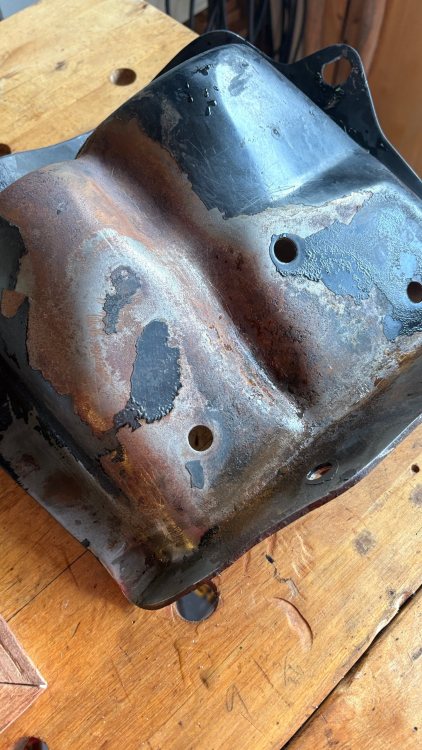
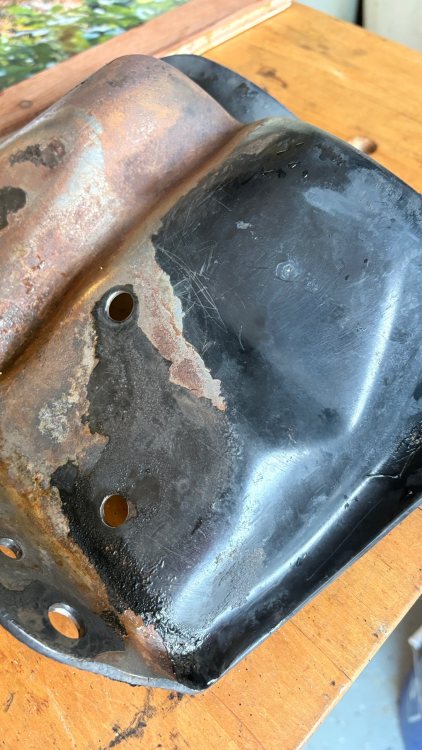
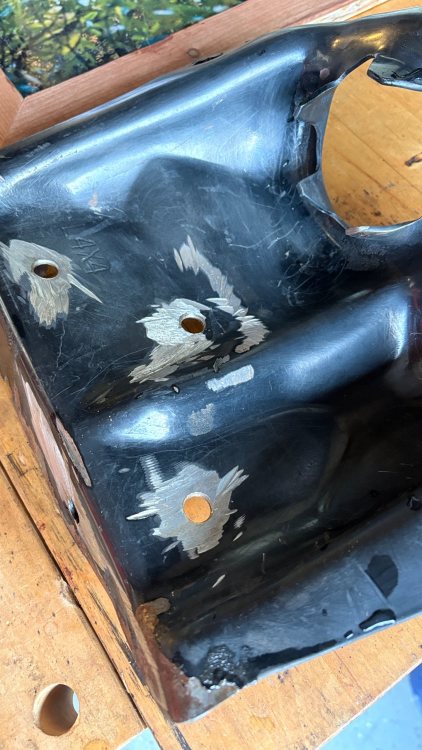
It is always best to remove as much of the unknown black coating as possible. That said, it is NOT mandatory to strip all surfaces down all the way to bare metal. After that, yes, clean with KBS Klean and then etch with RustBlast. Hopefully that helps. Please reach back out with additional questions.
-
I did two more coats on those plastic wheel well liners and they look unbelievably good! Thanks!
-
Today, I started prepping all of the front end parts I have removed from my project in order to do the 3 step system with Rust Seal. After one pass with KBS Klean in order to just remove all of the built up grime and dirt, I noticed many parts have a black coating on them that is partially coming off already. I'm unsure if it's original paint or an undercoating of some kind. See photos for an example of what the coil mount and radius arm looks like after a pass of KBS Klean, scraping and using a wire wheel to clean all of the grime and loose rust and black coating off. Do you think the leftover black coating will be a problem if I remove all of the loose stuff, KBS Klean and use Rust Blast? Or does it needs to be stripped completely? Thanks for your help and Happy Holidays!

-
Yes, 220 or 400 will absolutely get the job done. RustSeal cures to .002" (2 mils) per coat which is the size gap RustSeal filles. Always apply RustSeal in THIN coats and never medium or heavy coats. That is key. Please reach back out with additional questions.
-
Can any other grit sand paper be used? I have 220 and 400, no 300. How big of a gap can rust seal fill?
-
Yes, that is what you have stated and we have considered this in all of our answers. Re-coating RustSeal can be done once the first or consecutive coat is dry-to-touch and does not leave a fingerprint which is typically within 2-6 hours depending on temperature and humidity. This timeframe may be longer on the inside of a tank because of the lack of airflow. RustSeal color does not matter. This is NOT recommended and discouraged. RustSeal Complete Directions -> https://www.kbs-coatings.com/rustseal-directions Please reach back out with additional questions.
-
Just too confirm the tank will be filled with water when in use? How long between coats do I wait? Does it matter what color I use as safety blue would allow me to see where I apply it better than black? an I just use denatured alcohol acetone to clean the seams prior to application?
-
Yes, for a powder coated seam surface, lightly scuff with 300 grit and then clean well with KBS Klean, rinse, and let dry. Yes, if the coating is being brushed, RustSeal will work great for the seams inside. What other questions might you have?
-
So do I still need too sand the seams with the sealer. Also because I am just doing the seams inside, will the rust seal also work?
-
For the inside of a tank, you will use Tank Sealer. Tank Sealer Directions -> https://www.kbs-coatings.com/tank-sealer-directions What other questions might you have.